While many games prioritize competitive mechanics or fast-paced action, there’s a special category of titles that focus on delivering deeply compelling narratives. Story-driven games have proven that the medium is capable of emotional storytelling that rivals film and literature, with some titles leaving lasting impacts on players long after the credits roll.
These games prioritize character development, meaningful choices, and immersive worlds that draw players into experiences far beyond simple gameplay mechanics. This guide highlights the types of story-based games worth exploring and what makes narrative-driven gaming such a powerful and unique medium.
Why Story-Driven Games Matter
Unlike passive storytelling mediums like movies or books, games offer a uniquely interactive form of narrative experience. Player choices, exploration pace, and even gameplay mechanics themselves can become storytelling tools, creating a level of emotional investment that other mediums struggle to replicate.
This interactivity means that story-driven games can create deeply personal experiences, where two players might have entirely different emotional journeys through the same game based on the choices they made or the pace at which they explored the narrative.
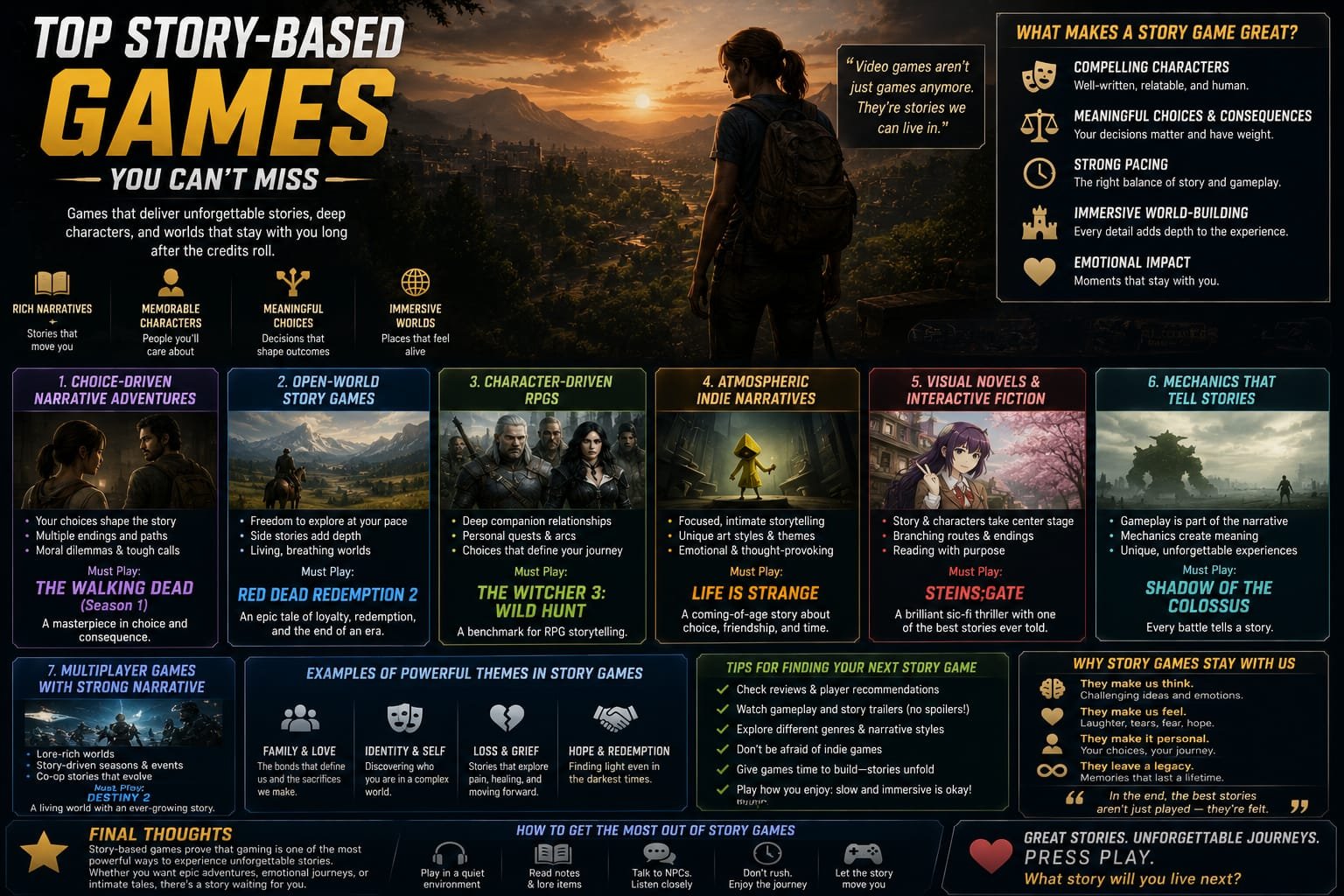
Choice-Driven Narrative Adventures
Games built around meaningful player choices have carved out a distinct genre within story-driven gaming. These titles present players with difficult decisions that genuinely impact the story’s direction, character relationships, and eventual outcomes, creating a sense of ownership over the narrative that linear storytelling can’t match.
The best choice-driven games avoid simple binary good-or-evil decisions, instead presenting morally complex situations without clear right answers. This complexity forces players to genuinely grapple with difficult choices, mirroring the nuanced decision-making required in real life rather than offering obvious optimal paths.
Open-World Story Games
Open-world games that successfully blend expansive exploration with strong narrative elements offer some of the most immersive storytelling experiences in gaming. These titles allow players to progress through the main story at their own pace while discovering rich side content that often deepens the overall world and lore.
The best open-world story games manage to make their side content feel meaningful rather than like distracting filler, weaving smaller character stories and world-building details throughout optional content that enriches the main narrative for players willing to explore beyond the critical path.
Character-Driven RPGs
Role-playing games with strong character development have long been a cornerstone of narrative-focused gaming. These titles often feature large casts of companion characters, each with their own backstories, personal arcs, and relationships with the player character that evolve throughout the game.
The depth of character writing in top-tier RPGs creates genuine emotional attachment, making moments of loss, triumph, or betrayal within these stories resonate powerfully with players who have invested significant time getting to know these fictional characters throughout their journey.
Atmospheric Indie Narratives
Independent developers have produced some of the most emotionally powerful and narratively ambitious games in recent years, often focusing on smaller, more intimate stories rather than epic, world-spanning narratives. These games frequently tackle mature, real-world themes with a level of nuance and artistic ambition that larger studio productions sometimes shy away from.
The smaller scope of many indie narrative games allows for tightly focused storytelling without unnecessary padding, often resulting in more emotionally impactful experiences precisely because every element serves the core narrative rather than being diluted across a larger, less focused game.
Visual Novels and Interactive Fiction
Visual novels represent a distinct storytelling format that prioritizes narrative and character interaction over traditional gameplay mechanics. These games often feature extensive branching storylines, allowing for numerous different endings based on player choices throughout the experience.
While sometimes underappreciated compared to more action-oriented games, visual novels have produced some of the most intricately plotted and emotionally sophisticated narratives in the entire gaming medium, appealing particularly to players who prioritize story depth over traditional gameplay challenges.
Games That Use Mechanics to Tell Stories
Some of the most innovative story-driven games use their core gameplay mechanics as storytelling devices themselves, rather than simply layering narrative on top of traditional gameplay systems. This approach creates a unique synergy where the act of playing itself becomes integral to understanding and experiencing the story.
This mechanical storytelling approach represents one of gaming’s unique strengths as a narrative medium, since it’s simply not possible to replicate this specific type of storytelling technique in passive mediums like film or literature.
Multiplayer Games With Strong Narrative Elements
While less common, some multiplayer-focused games have successfully incorporated meaningful narrative elements without sacrificing their core competitive or cooperative gameplay. These titles often use environmental storytelling, lore documents, or narrative-driven seasonal content to build an engaging world alongside their primary gameplay loop.
This growing trend demonstrates that narrative depth and competitive or cooperative multiplayer gameplay aren’t mutually exclusive, opening possibilities for future games to successfully blend both elements in increasingly sophisticated ways.
What Makes a Story-Driven Game Truly Great
Beyond just having a narrative, truly great story-driven games excel in specific areas: well-developed characters that feel genuinely human despite their fictional nature, pacing that balances narrative progression with gameplay without feeling rushed or overly slow, and thematic consistency that ties the entire experience together into a cohesive whole.
Strong voice acting, thoughtful dialogue writing, and environmental storytelling that rewards observant players all contribute to elevating a good story-driven game into a truly memorable one that resonates with players long after completion.
The Emotional Impact of Gaming Narratives
Many players report that certain story-driven games have left lasting emotional impacts comparable to their favorite films or novels, sometimes even more powerful due to the interactive, personal nature of the experience. This emotional resonance speaks to the maturation of gaming as a storytelling medium capable of tackling complex, meaningful themes.
This growing recognition of gaming’s narrative potential has led to increased mainstream media coverage and critical analysis of story-driven games, further legitimizing the medium as a genuine art form alongside more traditionally recognized storytelling mediums.
Finding the Right Story-Driven Game for You
With such a diverse range of narrative styles and genres available, finding the right story-driven game depends heavily on personal preference. Players who enjoy grappling with difficult moral choices might gravitate toward choice-driven narrative adventures, while those who prefer deep character relationships might find RPGs with strong companion systems more rewarding.
Exploring different subgenres within story-driven gaming, rather than assuming all narrative games offer similar experiences, helps uncover which specific storytelling style resonates most with your personal taste in narrative and character development.
Final Thoughts
Story-driven games represent some of the most emotionally impactful and artistically ambitious experiences within the entire gaming medium. Whether through meaningful player choices, deeply developed characters, or innovative use of gameplay mechanics as storytelling tools, these games demonstrate gaming’s unique potential as a powerful narrative medium.
For players seeking experiences that go beyond simple entertainment and offer genuine emotional resonance, exploring the diverse world of story-driven games opens the door to some of the most memorable and thought-provoking experiences the gaming medium has to offer.
About the Author