Not everyone has access to a high-powered gaming rig with the latest graphics card and top-tier processor, and that’s completely fine. The PC gaming world has an enormous library of excellent titles that run smoothly on modest hardware, proving that great gameplay doesn’t always require cutting-edge specifications.
Whether you’re using an older laptop, an entry-level machine, or a device primarily meant for work and study, there are plenty of enjoyable games that won’t push your hardware to its limits. This guide highlights some of the best game categories and considerations for low-end laptop gaming, along with tips to get the most out of limited hardware.
Understanding Your Laptop’s Limitations
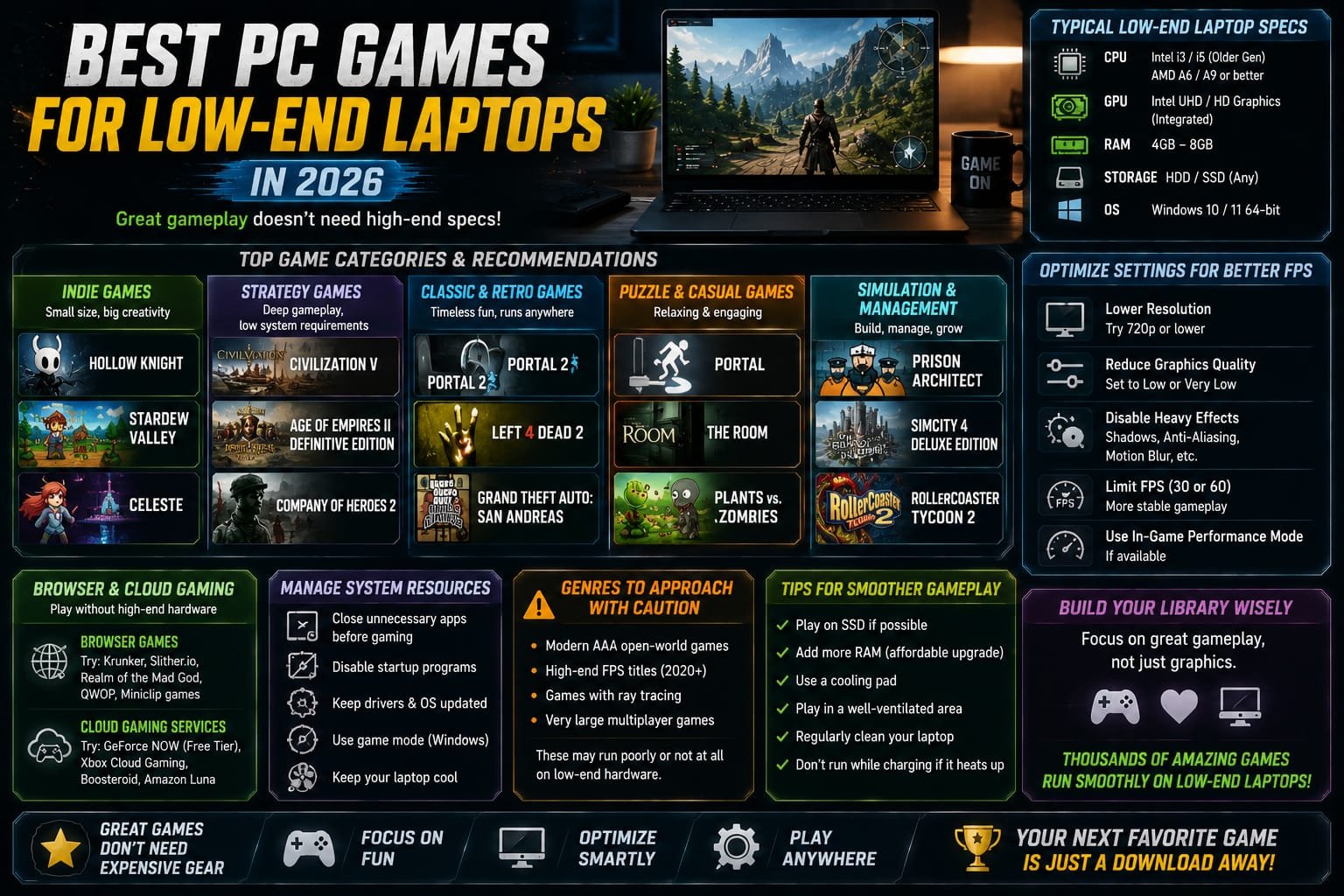
Before diving into game choices, it helps to understand what specifically makes a laptop “low-end” for gaming purposes. Typically, this means integrated graphics rather than a dedicated graphics card, limited RAM, and an older or lower-tier processor. These limitations mean that visually demanding, graphically intensive AAA titles will likely struggle to run smoothly, if they run at all.
However, this doesn’t mean gaming is off the table entirely. Many genres and specific titles are designed with lower system requirements in mind, either due to simpler graphics, efficient optimization, or intentionally lightweight design choices by developers.
Indie Games: A Goldmine for Low-End Hardware
Independent games are often the best starting point for low-end laptop gamers. Many indie developers work with smaller budgets and simpler art styles, such as pixel art or minimalist graphics, which naturally require far less processing power than photorealistic AAA titles.
Despite their lighter system requirements, indie games frequently offer incredibly engaging gameplay, creative mechanics, and compelling storytelling that rivals or even surpasses bigger budget productions. The indie gaming scene has produced some of the most critically acclaimed titles in recent years, proving that impressive graphics aren’t a requirement for a great gaming experience.
Strategy Games: Light on Graphics, Heavy on Depth
Strategy games, particularly turn-based titles, tend to be relatively light on system requirements since they don’t rely on fast-paced, high-fidelity real-time rendering. These games prioritize deep gameplay mechanics, strategic decision-making, and long-term planning over graphical intensity.
This makes the strategy genre particularly well-suited for low-end laptops, offering hundreds of hours of engaging gameplay without straining limited hardware resources. Players who enjoy methodical, thoughtful gameplay will find plenty of excellent options within this genre.
Classic and Retro-Style Games
Older classic titles, along with modern games intentionally designed with a retro aesthetic, run exceptionally well on low-end hardware. These games were often built during eras when hardware limitations were far more restrictive than today’s low-end laptops, meaning their system requirements remain very forgiving even on modest modern machines.
Beyond just running smoothly, many classic and retro-style games are celebrated for their gameplay depth and creativity, offering experiences that remain genuinely enjoyable regardless of their simpler visual presentation.
Puzzle and Casual Games
Puzzle games are another excellent category for low-end laptops, as they typically prioritize clever mechanics and level design over graphical demands. These games are perfect for shorter gaming sessions and don’t require powerful hardware to deliver an engaging, satisfying experience.
The casual and puzzle genre has expanded significantly in recent years, with many titles incorporating light narrative elements, atmospheric music, and unique art styles that provide a rich experience without taxing system resources.
Simulation and Management Games
Simulation and management games, such as those focused on building cities, running businesses, or managing virtual farms, tend to be less demanding on graphics hardware while still offering deep, engaging gameplay loops. These games often prioritize systems and mechanics over visual spectacle.
For players who enjoy long-term progression and creative problem-solving, this genre offers substantial replay value without requiring the powerful hardware that graphically intensive genres typically demand.
Optimizing Game Settings for Better Performance
Even games not specifically designed for low-end hardware can often run acceptably with the right settings adjustments. Lowering resolution, disabling resource-intensive graphical effects like shadows and anti-aliasing, and reducing draw distance can significantly improve performance on limited hardware.
Many games also include preset performance modes specifically designed for lower-end systems, which automatically adjust multiple settings to prioritize smooth frame rates over visual fidelity. Taking the time to explore and adjust these settings can make a noticeable difference in overall gameplay experience.
Browser-Based and Cloud Gaming Options
For laptops that struggle even with lightweight installed games, browser-based games offer an accessible alternative that requires minimal local processing power. Many browser games have evolved significantly in quality and complexity, offering surprisingly engaging experiences without any installation required.
Cloud gaming services have also become increasingly viable options, allowing players to stream more demanding games from remote servers rather than relying on local hardware. This can effectively bypass low-end hardware limitations entirely, provided a stable and sufficiently fast internet connection is available.
Managing System Resources While Gaming
Beyond choosing the right games, managing your laptop’s overall system resources can meaningfully improve gaming performance. Closing unnecessary background applications, disabling startup programs that aren’t essential, and ensuring your laptop isn’t overheating during extended sessions all contribute to smoother gameplay.
Keeping your operating system and graphics drivers updated is also important, as these updates often include performance optimizations that can improve compatibility and efficiency, even on older hardware.
Genres to Approach with Caution
While many genres work well on low-end laptops, certain types of games are generally best avoided unless your hardware exceeds typical low-end specifications. Graphically intensive open-world titles, modern first-person shooters with high-fidelity graphics, and games requiring real-time ray tracing or advanced physics simulations tend to struggle significantly on limited hardware, regardless of settings adjustments.
Recognizing these limitations early helps set realistic expectations and prevents frustration from attempting to run games that simply aren’t compatible with lower-end system specifications.
Building a Realistic Gaming Library
Rather than feeling limited by lower-end hardware, it’s worth embracing the enormous variety of excellent games specifically suited for such systems. Building a personal library focused on indie titles, strategy games, puzzle games, and well-optimized classics can provide hundreds of hours of genuinely enjoyable gameplay without ever needing to upgrade hardware.
Many gamers with low-end laptops end up discovering hidden gem titles they might have otherwise overlooked, simply because hardware limitations led them to explore genres and games outside the mainstream AAA space.
Final Thoughts
Owning a low-end laptop doesn’t mean missing out on quality PC gaming experiences. With careful game selection focused on indie titles, strategy games, classic releases, and well-optimized casual experiences, along with smart settings adjustments and system resource management, gamers can enjoy a rich and varied library without needing expensive hardware upgrades.
The PC gaming landscape offers far more diversity than just graphically demanding AAA blockbusters, and exploring these accessible alternatives often leads to discovering genuinely excellent games that prioritize creativity and gameplay depth over raw visual power.
About the Author