Every gamer, whether casual or aspiring competitive player, eventually asks the same question: how do the pros make it look so easy? The truth is that skilled gamers aren’t necessarily born with faster reflexes or better instincts. Most of what separates an average player from a highly skilled one comes down to deliberate practice, smart habits, and a genuine understanding of the game’s mechanics.
Improving at gaming isn’t about grinding endless hours mindlessly. It’s about practicing the right things, in the right way, consistently. This guide breaks down proven strategies that can help any player, regardless of the genre they play, level up their skills faster and more effectively.
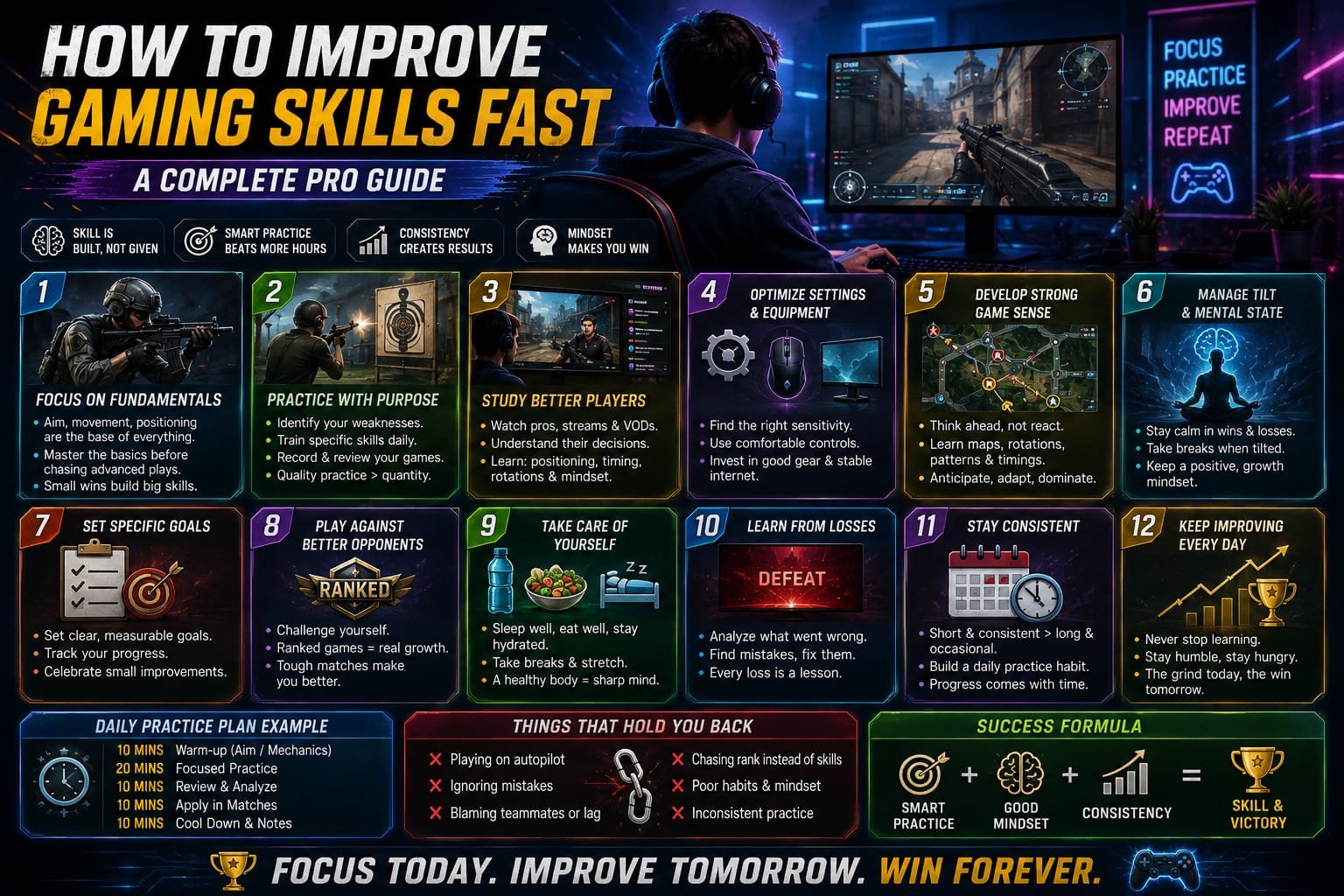
Understand That Skill Is Built, Not Given
One of the biggest mental shifts a player needs to make is understanding that gaming skill is a learnable and improvable trait, much like a physical sport. Reaction time, decision-making under pressure, map awareness, and mechanical precision can all be trained through consistent, focused practice.
Players who plateau often do so because they stop actively trying to improve and instead just play on autopilot. Recognizing that even small, consistent improvements compound over time is the first step toward meaningful progress.
Focus on Fundamentals Before Advanced Techniques
It’s tempting to try and copy flashy plays from professional streamers, but without solid fundamentals, these advanced techniques rarely translate into actual improvement. Before worrying about complex strategies, make sure basics like aim accuracy, movement control, and game sense are solid.
In shooter games, this means practicing crosshair placement and recoil control before attempting advanced flick shots. In strategy games, understanding resource management and map control matters more early on than memorizing complex late-game combos. Building a strong foundation makes advanced techniques far easier to learn later.
Practice with Purpose, Not Just Repetition
Simply playing more hours doesn’t automatically translate into skill improvement. Purposeful practice, where you actively focus on specific weaknesses, produces far better results than mindless repetition. If your aim is inconsistent, dedicate focused sessions specifically to aim training rather than just playing full matches hoping to improve passively.
Reviewing your own gameplay recordings is one of the most effective yet underused improvement methods. Watching your own matches allows you to spot mistakes in positioning, decision-making, and mechanics that are difficult to notice in the heat of the moment.
Study Better Players
Watching skilled players, whether through streams, tournament VODs, or high-level gameplay videos, provides valuable insight into decision-making processes that aren’t always obvious from a beginner’s perspective. Pay attention not just to their mechanical skill, but to their positioning, timing, and how they react to different situations.
Rather than just watching passively, try to understand the reasoning behind their decisions. Why did they rotate at that specific moment? Why did they choose that particular engagement instead of avoiding it? This kind of analytical viewing accelerates game sense development significantly faster than mechanical practice alone.
Optimize Your Settings and Equipment
Your in-game settings and hardware setup can have a surprisingly large impact on your performance. Sensitivity settings that don’t match your natural aiming style can hold back even a mechanically skilled player. Spend time experimenting with different sensitivity and control configurations until you find one that feels genuinely comfortable.
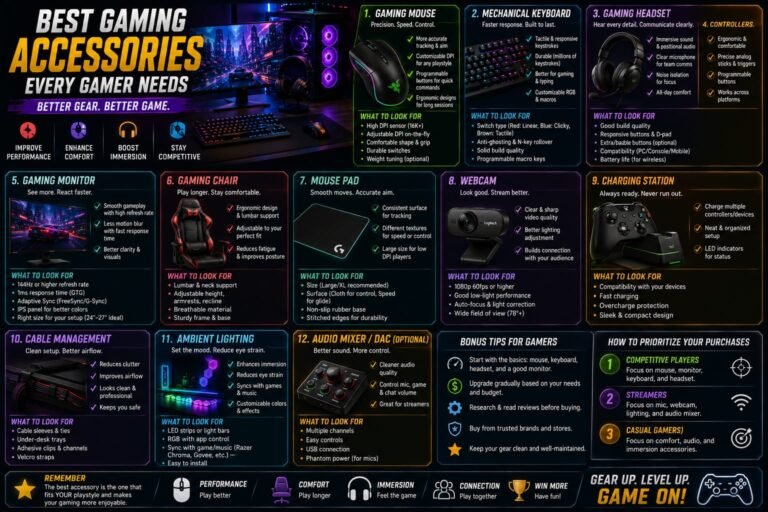
For competitive gaming, investing in reliable equipment, whether that’s a responsive controller, a comfortable mouse, or a stable internet connection, removes unnecessary obstacles between your skill level and your actual in-game performance. Even the most skilled player will struggle if their equipment is inconsistent or unreliable.
Develop Strong Game Sense
Game sense refers to the intuitive understanding of when to engage, retreat, rotate, or play passively based on the current match situation. This skill develops through experience but can be accelerated by consciously thinking through your decisions rather than reacting purely on instinct, especially during practice sessions.
Understanding common patterns, such as typical enemy rotations, popular ambush spots, or predictable player behavior in certain situations, allows you to anticipate rather than simply react. Over time, this pattern recognition becomes second nature and significantly improves overall decision-making speed.
Manage Tilt and Mental State
Emotional control is an often overlooked but critical component of skill improvement. Frustration after a loss or a series of bad plays, commonly known as “tilt,” leads to worse decision-making and can spiral into a losing streak that has more to do with mental state than actual skill decline.
Learning to recognize when you’re tilted and taking a short break rather than continuing to play frustrated is a habit that separates consistently improving players from those who plateau or even regress. Approaching each match, win or lose, as a learning opportunity rather than an emotional rollercoaster leads to steadier long-term improvement.
Set Specific, Measurable Goals
Vague goals like “get better at the game” are far less effective than specific, measurable objectives. Setting goals such as improving headshot percentage, reducing deaths per match, or mastering a specific character or strategy gives you a clear focus for each practice session.
Tracking progress toward these specific goals, whether through in-game statistics or personal notes, provides tangible evidence of improvement over time, which also helps maintain motivation during periods where progress might feel slower than expected.
Play Against Better Opponents
Consistently playing against opponents at or slightly above your skill level accelerates improvement far more than playing against significantly weaker players. While winning easily feels satisfying in the short term, it doesn’t push your skills to adapt and grow.
Ranked or competitive matchmaking systems are designed to pair you with reasonably matched opponents, which naturally provides this beneficial challenge. Embracing difficult matches, rather than avoiding them, is where genuine skill growth happens most rapidly.
Take Care of Physical Well-Being
Physical health directly impacts gaming performance more than most players realize. Adequate sleep improves reaction time and decision-making clarity, while dehydration and poor posture can lead to fatigue that negatively affects performance during longer sessions.
Taking regular breaks during extended gaming sessions prevents both physical strain and mental fatigue, both of which can cause performance to decline the longer you play without rest. Treating gaming with the same physical care as any skill-based activity pays dividends in consistency and long-term performance.
Learn From Losses, Not Just Wins
It’s natural to want to move past a frustrating loss quickly, but losses often contain more valuable learning opportunities than wins. Analyzing what went wrong, whether it was a positioning mistake, a poor decision under pressure, or a mechanical error, provides specific, actionable feedback for improvement.
Approaching losses with curiosity rather than frustration transforms them from discouraging setbacks into valuable learning experiences that directly contribute to future improvement.
Stay Consistent Rather Than Binge Practicing
Short, consistent practice sessions spread across multiple days tend to produce better skill retention than occasional long binge sessions. This is similar to how learning any skill works best with regular, spaced repetition rather than cramming.
Even 30 to 45 minutes of focused, purposeful practice daily can lead to more consistent improvement than sporadic multi-hour sessions once or twice a week. Building gaming improvement into a regular routine makes progress feel steady and sustainable rather than overwhelming.
Final Thoughts
Improving at gaming quickly isn’t about finding a secret shortcut or trick that instantly transforms your skill level. It’s about applying focused, deliberate practice, studying better players, managing your mental state, and consistently pushing yourself against challenging opponents.
By combining strong fundamentals with purposeful practice and a healthy mindset toward both wins and losses, any player can see meaningful skill improvement within weeks rather than months. The players who improve fastest aren’t necessarily the most naturally talented, but the ones who approach their practice with intention and consistency.
About the Author