Esports has grown from a niche hobby into a global entertainment industry that rivals traditional sports in viewership, prize pools, and cultural impact. What once took place in small local arcades has evolved into massive international events held in packed stadiums, streamed to millions of viewers worldwide, with professional players earning substantial incomes through competition, sponsorships, and content creation.
For fans looking to follow the competitive gaming scene this year, understanding the major tournaments across different game genres helps make sense of an increasingly crowded and exciting esports calendar. This guide covers the most significant tournaments worth following, along with what makes each one unique.
Why Esports Tournaments Matter
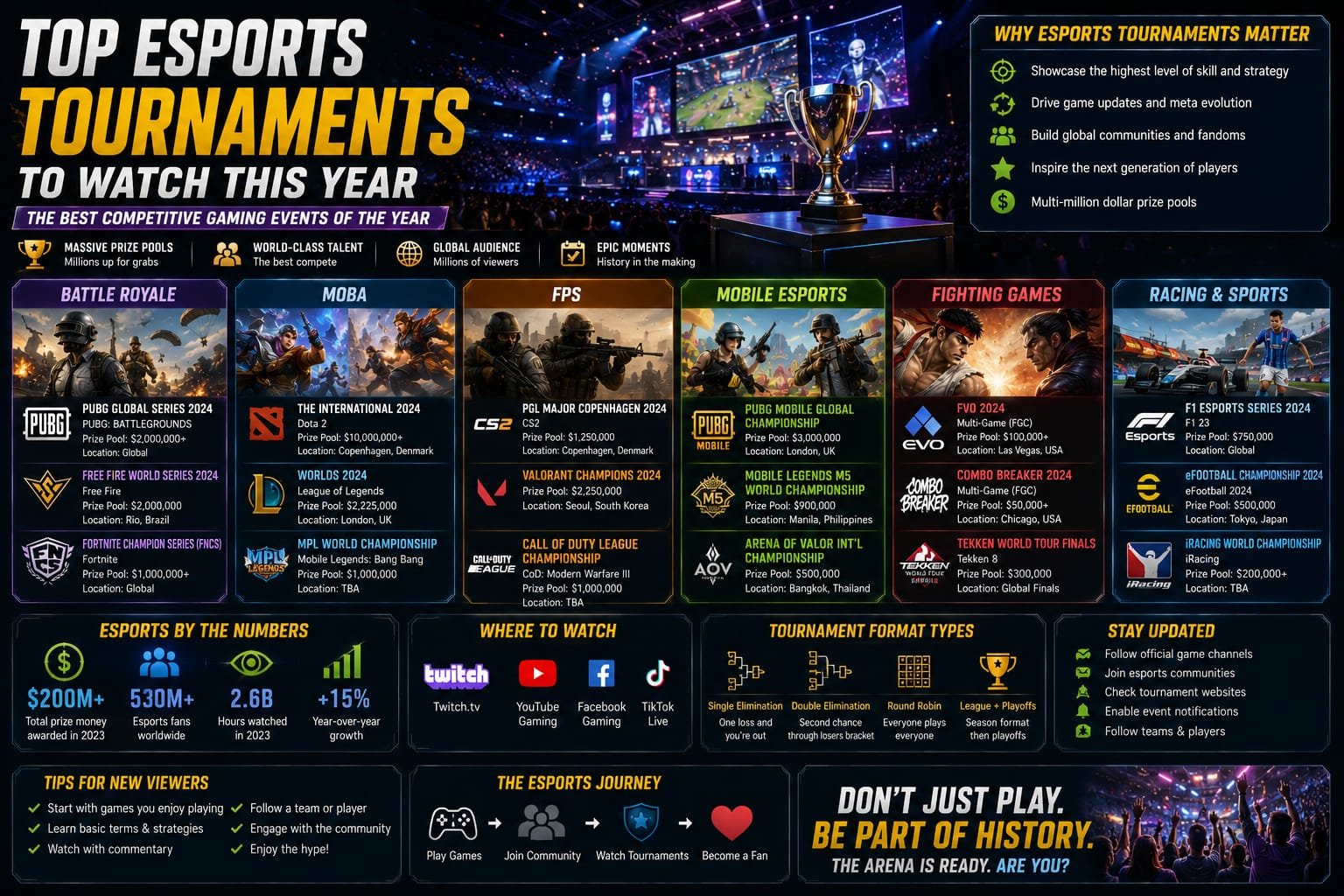
Esports tournaments serve as the pinnacle of competitive gaming, showcasing the highest level of skill, strategy, and teamwork within each respective game. These events also drive significant updates and balance changes within games, as developers often use tournament data and professional player feedback to refine gameplay for the broader community.
Beyond the competitive aspect, major tournaments have become cultural events in their own right, complete with elaborate opening ceremonies, dedicated fan communities, and storylines that unfold across multiple seasons, much like traditional sports leagues.
Battle Royale Tournament Circuits
Battle royale games have developed some of the most exciting tournament formats in esports, given the unpredictable nature of matches involving many simultaneous competitors. These tournaments typically use point-based systems combining placement and eliminations across multiple matches, creating dramatic scoring battles that often come down to the final moments of a tournament.
The spectator experience for battle royale tournaments has improved significantly over the years, with broadcast production now offering multiple camera angles, real-time statistics overlays, and dedicated casting teams that help viewers follow the chaotic action across an entire lobby of competing teams.
MOBA World Championships
Multiplayer online battle arena games host some of the largest and most prestigious esports tournaments in the industry. These world championship events often feature months of regional qualifying tournaments leading up to a grand international final, creating a structured competitive narrative throughout the year.
The strategic depth of MOBA games translates into tournaments that reward viewers who understand deeper gameplay mechanics, though broadcast production has increasingly focused on making these complex games more accessible to newer viewers through clear explanations and engaging commentary.
First-Person Shooter Championships
Competitive first-person shooter tournaments showcase incredibly precise mechanical skill combined with intense strategic team coordination. These events often feature best-of-series match formats across multiple maps, requiring teams to demonstrate versatility across different in-game environments and situations.
The tension in these tournaments frequently peaks during elimination rounds, where a single mistake can end a team’s entire tournament run, creating some of the most nerve-wracking moments in competitive esports viewing.
Mobile Esports Tournaments
Mobile esports has grown into a massive competitive scene, particularly strong in regions where mobile gaming dominates the broader gaming culture. These tournaments have proven that competitive gaming isn’t limited to PC and console platforms, with mobile titles now hosting international championships offering substantial prize pools.
The accessibility of mobile esports, both for players and spectators who can easily follow matches on their own devices, has contributed significantly to the genre’s rapid growth in viewership and participation over recent years.
Fighting Game Community Events
Fighting game tournaments maintain a distinctly different culture compared to other esports genres, often featuring open-bracket formats where amateur players can compete directly against top professionals in the same tournament. This creates a uniquely accessible and community-driven atmosphere that longtime fans particularly value.
The one-on-one nature of fighting game matches creates intensely personal rivalries and storylines between individual players, contributing to a passionate community culture that has remained strong since the earliest days of competitive gaming.
Racing and Sports Simulation Competitions
Racing and sports simulation esports have carved out a dedicated competitive niche, often blending traditional sports fandom with gaming culture. These tournaments frequently attract crossover interest from traditional sports fans curious about the virtual competitive equivalent of their favorite real-world sports.
The realistic nature of these simulations means that tournament results often closely mirror the skills required in actual physical sports, creating an interesting bridge between traditional athletic competition and competitive gaming.
How Prize Pools Have Evolved
Esports tournament prize pools have grown dramatically over the past decade, with major events now offering multi-million dollar total prize pools distributed among top-performing teams and players. Some tournaments incorporate crowdfunding elements, where a portion of in-game purchase revenue directly contributes to the overall prize pool, creating direct community involvement in tournament stakes.
This significant growth in prize money has helped legitimize esports as a genuine career path, attracting increasingly skilled talent and encouraging more structured, professional team organizations to invest in player development and support infrastructure.
The Role of Streaming Platforms
Streaming platforms have fundamentally transformed how fans consume esports content, providing free, accessible broadcasts of major tournaments to global audiences. Interactive chat features allow viewers to engage in real time with other fans during matches, creating a communal viewing experience that traditional broadcast television struggles to replicate.
Many tournaments now also feature dedicated co-streaming arrangements, where popular content creators provide alternative commentary and reactions alongside the official broadcast, offering viewers different perspectives and personalities to follow throughout a tournament.
Regional vs International Tournaments
Understanding the distinction between regional and international tournaments helps fans follow the broader competitive narrative throughout a season. Regional tournaments typically serve as qualifying events, determining which teams earn the right to compete at larger international championships against the best teams from other regions.
This structure creates compelling storylines, as regional rivalries build throughout a season before culminating in high-stakes international matchups where regional pride, in addition to individual and team prestige, comes into play.
Tips for Following Esports Tournaments as a New Fan
For newcomers interested in following esports tournaments, starting with a game you already enjoy playing makes understanding the strategic nuances significantly easier. Following dedicated esports news sources and official team or player social media accounts helps stay updated on tournament schedules, results, and storylines throughout the competitive season.
Watching tournament broadcasts with knowledgeable commentators, who explain strategic decisions and mechanical plays in real time, also helps newer viewers develop a deeper appreciation for the skill and strategy involved, even in genres they aren’t deeply familiar with as players themselves.
The Growing Legitimacy of Esports
Esports has increasingly gained recognition as a legitimate competitive and entertainment industry, with growing institutional support including university scholarship programs, dedicated training facilities, and even discussions around Olympic inclusion for certain competitive gaming titles. This growing legitimacy continues to attract broader mainstream media coverage and sponsorship interest from major global brands.
This ongoing evolution suggests that esports tournaments will only continue growing in scale, production quality, and cultural significance in the coming years, further blurring the lines between traditional sports entertainment and competitive gaming.
Final Thoughts
The esports tournament landscape offers an incredibly diverse range of competitive experiences across nearly every gaming genre imaginable, from the strategic depth of MOBA championships to the mechanical precision of shooter tournaments and the accessible excitement of battle royale competitions. Following these events provides not just entertainment, but insight into the highest level of strategy and skill within each respective game.
Whether you’re a longtime esports fan or just beginning to explore competitive gaming as a spectator, this year’s tournament calendar offers plenty of exciting matchups and storylines across every major genre worth following throughout the competitive season.
About the Author