Few genres have reshaped the gaming industry as dramatically as battle royale games. What began as a niche mod for a survival game has grown into one of the most dominant genres across PC, console, and mobile platforms, generating billions in revenue and creating some of the biggest esports scenes in gaming history.
The genre’s core appeal is simple yet endlessly engaging: drop a large number of players into a shrinking map and let only one player or team survive. But within that simple premise, developers have found countless ways to differentiate their titles, from unique mechanics and art styles to different pacing and strategic depth. Here’s a breakdown of the top battle royale games worth playing in 2026, across different platforms and playstyles.
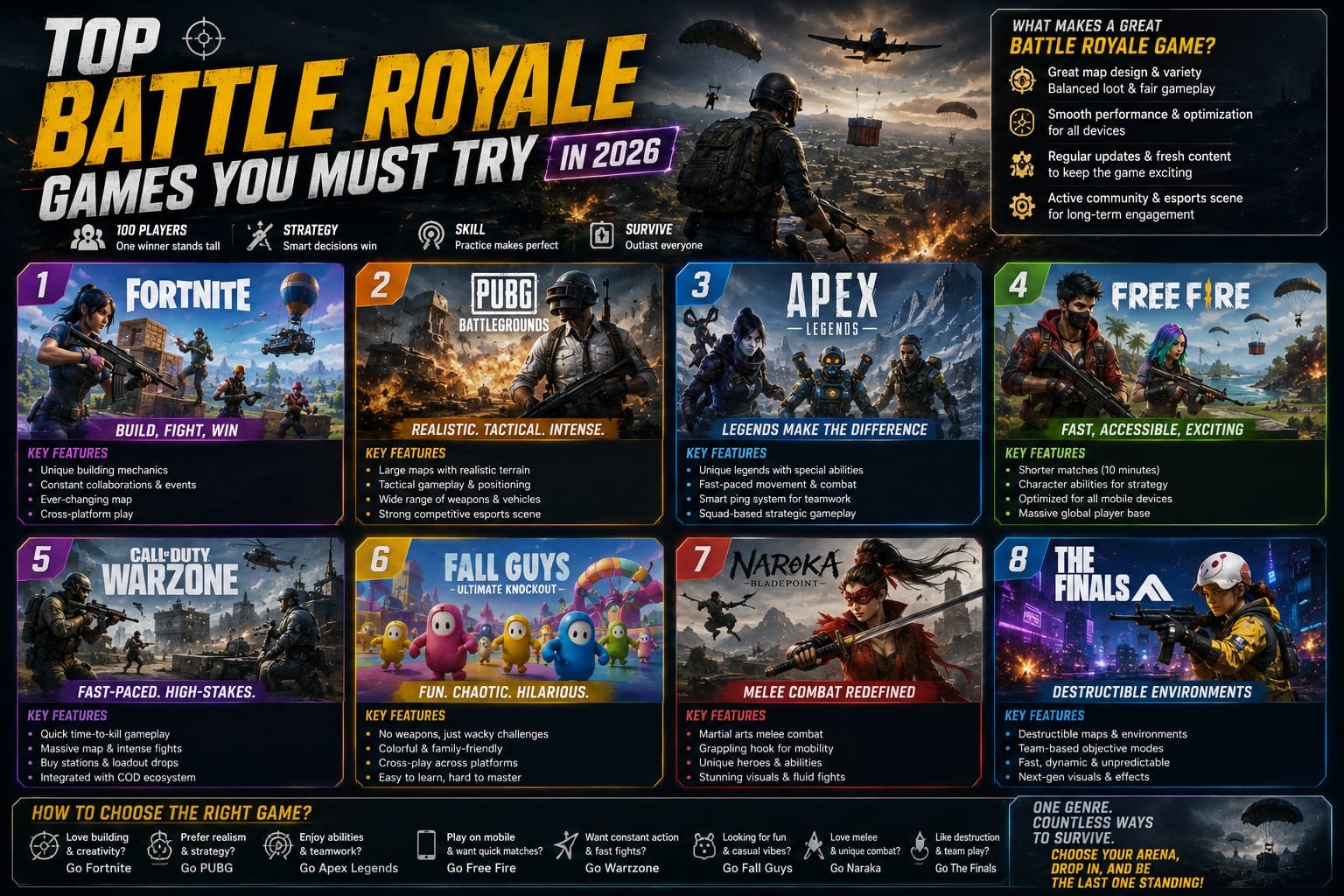
What Makes a Great Battle Royale Game
Before diving into specific titles, it’s worth understanding what separates a great battle royale game from an average one. Map design plays a huge role, since it needs to encourage both strategic positioning and exciting encounters without becoming predictable. Weapon balance is equally important, ensuring no single strategy or loadout dominates every match.
Beyond mechanics, a strong battle royale game needs consistent content updates, active developer support, and a healthy competitive ecosystem to keep the player base engaged long-term. The best titles in this genre have managed to combine all these elements successfully.
Fortnite: The Genre-Defining Giant
Fortnite remains one of the most culturally significant battle royale games ever released. Its combination of building mechanics, frequent collaborations with movies, music artists, and other games, along with constant map evolution, has kept it relevant for years in an industry where trends often shift quickly.
The building mechanic sets Fortnite apart from most other battle royale titles, adding a layer of strategic depth where players can construct cover, high ground, and defensive structures in real time during fights. This creates a skill ceiling that rewards both combat mechanics and quick construction skills simultaneously.
PUBG: The Original Battle Royale Blueprint
PlayerUnknown’s Battlegrounds is often credited with popularizing the modern battle royale format that countless other games have since built upon. Its realistic approach to gunplay, vehicle mechanics, and large-scale maps creates a tense, methodical experience that rewards patience and tactical positioning.
PUBG continues to maintain a dedicated competitive scene, with a gameplay style that emphasizes strategic decision-making over fast-paced action, appealing to players who enjoy a slower burn toward intense, high-stakes final circles.
Apex Legends: Character Abilities Meet Battle Royale
Apex Legends successfully blended hero shooter mechanics with the battle royale format, introducing unique character abilities that add strategic depth beyond just weapon skill. Each playable legend brings distinct abilities that can change how a team approaches fights, movement, and map control.
The game’s fast, fluid movement system, combined with a ping system that allows for effective communication without voice chat, has made it particularly popular among players who value both mechanical skill and team-based strategy.
Free Fire: Built for Mobile-First Players
Free Fire was designed specifically for mobile devices, offering shorter matches, smaller maps, and lighter system requirements compared to console-focused battle royale titles. This accessibility has made it especially popular in regions where mobile gaming dominates and high-end gaming hardware isn’t as widely available.
Its character ability system, similar in concept to Apex Legends but tailored for mobile play, adds strategic variety while keeping matches fast-paced and accessible for players with limited session time.
Call of Duty: Warzone
Warzone brought the fast-paced, high-lethality gunplay that the Call of Duty franchise is known for into the battle royale format. Its focus on quick time-to-kill and aggressive engagements creates a different pacing compared to more methodical titles like PUBG, appealing to players who prefer constant action over prolonged strategic positioning.
The game’s integration with the broader Call of Duty ecosystem, including weapon progression and cross-title content, has helped it maintain a large and dedicated player base since its release.
Fall Guys: A Lighthearted Take on the Genre
Not every battle royale game needs to revolve around combat. Fall Guys reimagined the genre as a chaotic, colorful obstacle course competition, stripping away weapons entirely in favor of physics-based challenges and mini-games. Its accessible, family-friendly approach broadened the genre’s audience considerably.
This lighthearted alternative demonstrates the flexibility of the battle royale format itself, proving that the “last one standing” concept can work in genres far removed from traditional shooters.
Naraka: Bladepoint
Naraka: Bladepoint introduced a unique melee-focused combat system into the battle royale genre, blending martial arts combat with grappling hook mobility and traditional ranged weapons. This creates a distinctly different combat rhythm compared to purely gun-based battle royale titles.
The emphasis on close-quarters combat and mobility skills offers a refreshing change of pace for players looking for something mechanically different from the typical shooter-focused battle royale formula.
Choosing the Right Battle Royale Game for You
With so many strong options available, choosing the right battle royale game depends heavily on personal preference. Players who enjoy realistic, tactical gameplay with longer matches might gravitate toward PUBG. Those who prefer fast, ability-driven action with strong team coordination elements often enjoy Apex Legends.
Mobile-first players benefit most from titles like Free Fire, designed specifically for shorter sessions and lower-end devices, while players seeking constant high-intensity action may prefer Warzone’s aggressive pacing. For something entirely different from combat-focused gameplay, Fall Guys offers a refreshing, competitive alternative.
The Role of Esports in Battle Royale Popularity
Competitive esports scenes have played a significant role in sustaining long-term interest in many battle royale titles. Games like PUBG, Fortnite, and Free Fire host major international tournaments with substantial prize pools, drawing both dedicated competitive players and large spectator audiences.
These esports ecosystems create additional incentive for skilled players to continue improving and competing, while also providing entertainment value for fans who enjoy watching high-level strategic and mechanical gameplay unfold in real time.
The Future of the Battle Royale Genre
As the genre matures, developers continue experimenting with new mechanics to keep gameplay fresh. Cross-platform play has become increasingly standard, allowing friends on different devices to team up regardless of whether they’re on PC, console, or mobile. Seasonal content updates, evolving maps, and narrative-driven events have also become common strategies to maintain long-term player engagement.
Innovation within the genre shows no signs of slowing down, with developers continuing to explore new combinations of mechanics, settings, and gameplay styles to differentiate their titles within an increasingly crowded market.
Final Thoughts
The battle royale genre has proven remarkably resilient and adaptable since its explosive rise in popularity. Whether you prefer the tactical realism of PUBG, the building mechanics of Fortnite, the ability-driven teamwork of Apex Legends, or the mobile-friendly accessibility of Free Fire, there’s a battle royale title suited to nearly every playstyle and platform preference in 2026.
Trying a few different titles from this list is the best way to discover which specific flavor of the genre resonates most with your personal gaming preferences, whether that’s methodical strategy, fast-paced action, or something entirely unique within the broader battle royale format.
About the Author