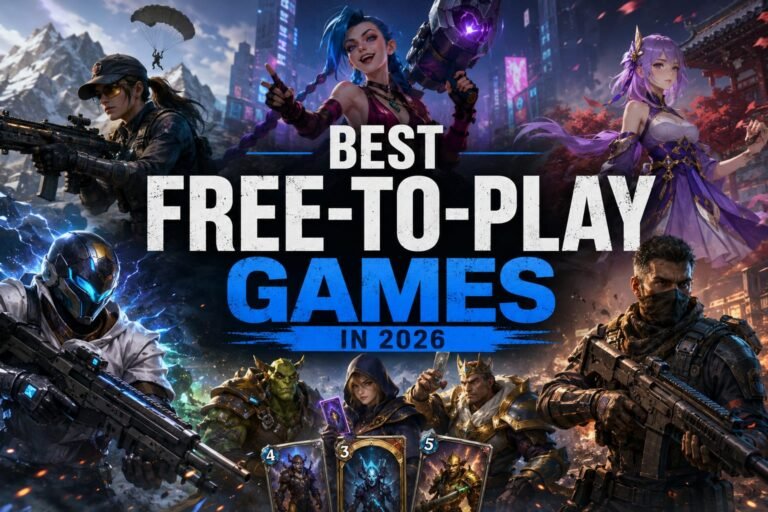
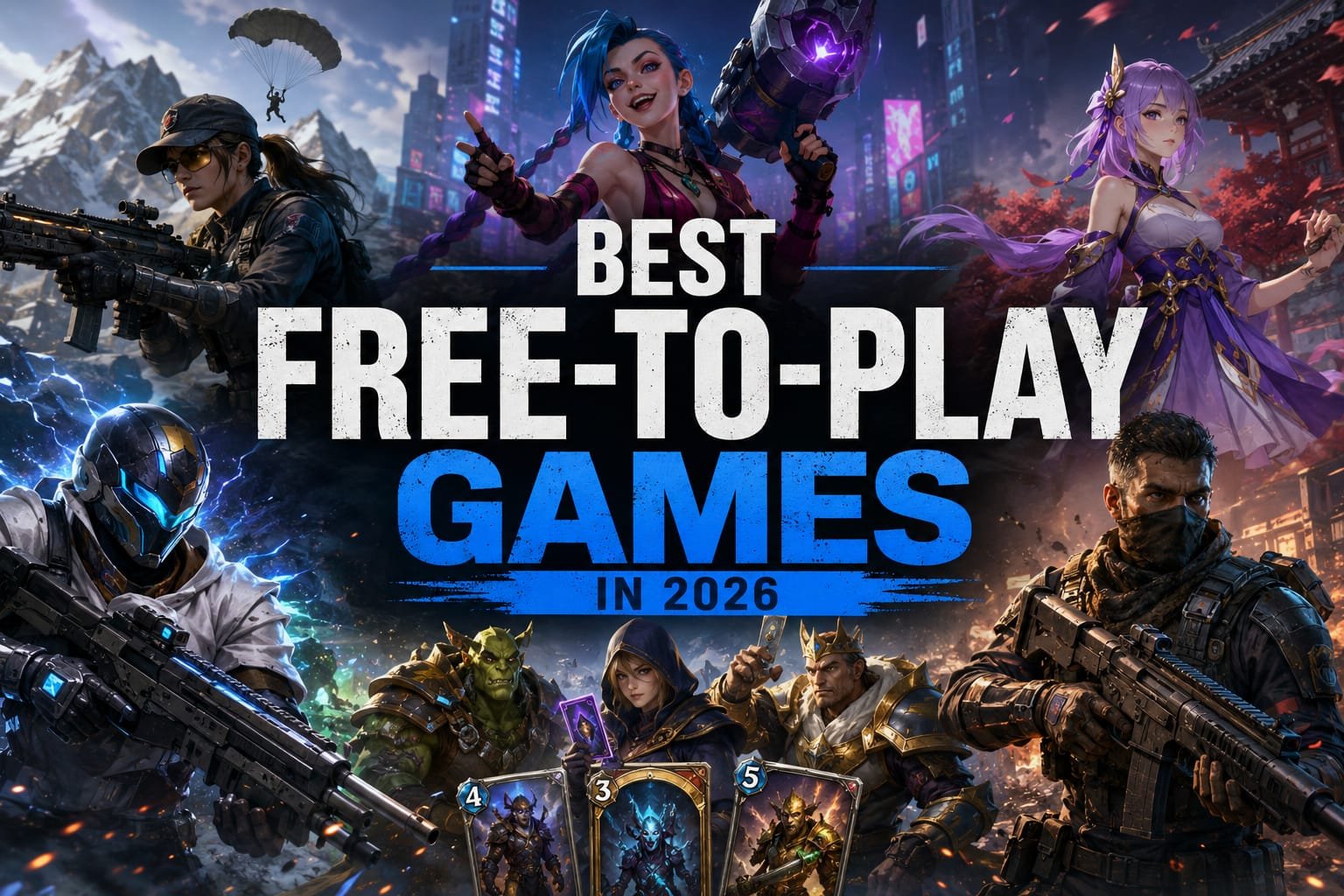
The free-to-play model has completely transformed the gaming industry, proving that games don’t need an upfront purchase price to deliver deep, engaging, and highly polished experiences. Many of today’s most popular and profitable games are entirely free to download and play, generating revenue instead through optional cosmetic purchases, battle passes, and other non-essential content.
For gamers looking to explore new titles without financial commitment, the free-to-play landscape in 2026 offers an impressive variety of genres and experiences. This guide highlights the strongest free-to-play options available, along with what to look for when evaluating whether a free game is worth your time.
Why Free-to-Play Games Have Become So Popular
The appeal of free-to-play games is straightforward: zero financial risk to try them out. This accessibility has allowed these titles to build massive player bases far larger than most premium, paid games could achieve, since the barrier to entry is simply downloading and installing rather than committing money upfront.
This large player base creates a positive cycle for multiplayer-focused free-to-play games specifically, since larger populations mean faster matchmaking, more active communities, and sustained developer investment in ongoing content updates to keep that substantial player base engaged long-term.
Battle Royale Free-to-Play Titles
The battle royale genre has become almost synonymous with the free-to-play model, with nearly every major title in this category available at no cost. These games generate revenue through cosmetic skins, battle passes, and seasonal content, without giving paying players any direct competitive advantage over free players.
This fair monetization approach, often referred to as “cosmetic-only” monetization, has become something of an industry standard for competitive free-to-play games, since pay-to-win mechanics tend to alienate the broader player base and damage a game’s long-term reputation and player retention.
Free-to-Play MOBA Games
Multiplayer online battle arena games were among the earliest genres to successfully adopt the free-to-play model at scale. These games typically offer free access to core gameplay, with monetization focused on cosmetic character skins and, in some cases, purchasable characters that can also be unlocked through gameplay progression without spending money.
The competitive integrity of free-to-play MOBA titles depends heavily on maintaining balanced gameplay between paying and non-paying players, which the most successful titles in this genre have managed to achieve through careful, ongoing balance adjustments.
Free-to-Play Shooter Games
First-person and third-person shooter games have increasingly adopted free-to-play models, offering full access to core multiplayer modes without requiring purchase. These games often monetize through weapon skins, character customization, and battle pass progression systems that provide cosmetic rewards for regular play.
The shift toward free-to-play shooters has significantly increased competition within the genre, pushing developers to continuously innovate and provide substantial post-launch content support to retain players who have numerous free alternatives readily available.
Gacha-Style RPGs
Gacha games, which incorporate randomized character or item collection mechanics, have become an incredibly popular free-to-play subgenre, particularly within role-playing games. These titles combine engaging story content and gameplay progression with collectible character systems that create ongoing engagement incentives.
While gacha mechanics have drawn some criticism for their randomized reward systems, many titles in this genre have found ways to remain generous with free rewards, allowing dedicated free-to-play players to still access a substantial portion of available content without significant financial investment.
Free-to-Play Card and Strategy Games
Digital card games have found particular success with the free-to-play model, often allowing players to build competitive decks entirely through gameplay-earned currency and card packs, without requiring purchases. The strategic depth of these games rewards skilled deck building and gameplay knowledge over pure financial investment.
This genre has demonstrated that free-to-play models can support genuinely deep strategic gameplay, appealing to players who enjoy long-term mastery and optimization without needing to make a financial commitment before experiencing the game’s full strategic depth.
Simulation and Sandbox Free-to-Play Games
Simulation and sandbox-style games have also embraced free-to-play models, offering core building, crafting, or management gameplay at no cost, with monetization focused on cosmetic items, expanded customization options, or convenience features that don’t fundamentally alter core gameplay balance.
These games often build passionate, creative communities around user-generated content, further extending their longevity and appeal well beyond what the base game alone might offer, creating ecosystems where players themselves contribute significantly to ongoing content variety.
Evaluating Fair Monetization in Free-to-Play Games
Not all free-to-play games are created equal when it comes to monetization fairness. The best titles in this space clearly separate cosmetic purchases from gameplay-impacting content, ensuring that spending money provides visual customization rather than competitive advantages over non-paying players.
Warning signs of poorly designed free-to-play monetization include mechanics that create significant gameplay disadvantages for free players, excessively aggressive prompts to spend money, or progression systems deliberately designed to feel frustratingly slow unless players make purchases to accelerate advancement.
The Role of Battle Passes
Battle passes have become a standard monetization feature across many free-to-play titles, offering a structured progression system with both free and premium reward tracks. Players complete in-game challenges or accumulate experience to unlock rewards, with premium battle passes typically offering additional cosmetic content for a modest one-time purchase.
This model has proven popular because it provides clear, achievable goals for regular players while offering reasonable value for those willing to make a small purchase, without creating the pay-to-win concerns associated with more aggressive monetization approaches.
Community and Longevity Considerations
When evaluating free-to-play games worth investing time into, considering the strength and activity level of the existing community matters significantly. Games with active, engaged communities tend to receive more consistent developer support and content updates, since sustained player interest directly justifies continued investment from the development team.
Checking recent update history and community sentiment through official forums or social media can provide valuable insight into whether a particular free-to-play title is likely to remain actively supported and worth the time investment for new players considering trying it out.
Balancing Multiple Free-to-Play Games
One advantage of the free-to-play model is the ability to try multiple games without financial commitment, allowing players to naturally discover which titles genuinely resonate with their preferences. Many gamers maintain a rotation of several free-to-play titles across different genres, switching between them based on mood or available time.
This flexibility represents one of the significant advantages free-to-play games offer compared to traditional premium titles, where the upfront cost often creates pressure to fully commit to a single game rather than exploring a broader variety of options.
Final Thoughts
The free-to-play landscape in 2026 offers remarkably deep and engaging experiences across nearly every gaming genre, proving that high-quality gameplay doesn’t require an upfront financial commitment. From competitive battle royale and shooter titles to deep strategic card games and immersive gacha RPGs, there’s substantial variety available for players willing to explore.
By understanding fair monetization practices and evaluating community activity and developer support, players can confidently explore the free-to-play space and discover genuinely excellent games without any financial risk, making this model one of the most player-friendly developments in modern gaming.
About the Author